


Deadly violence in Delta sharpens the question of campaign safety, while economic policy and electoral preparations face tests.
An election campaign should ask citizens for their votes. In Uduere, Delta State, families are now mourning people who went to a political gathering.
Police said on Tuesday that six people died in Monday’s violence at a campaign event in Ughelli North. That preliminary figure is higher than the four deaths initially reported by Ovie Omo-Agege’s campaign organisation. The circumstances and responsibility remain under investigation.
This is the most consequential political development since Friday.
Its significance extends beyond one party’s campaign. Every attack raises a question for the next person considering attending a meeting, volunteering or accompanying a candidate: is participation worth the risk?
When citizens begin making that calculation, electoral competition has already suffered.
Delta Needs Evidence And Accountability

The NDC has alleged official complicity. The Delta State Government has rejected attempts to link Governor Sheriff Oborevwori to the violence, condemned the killings and promised that those responsible will face justice. Those competing positions must remain distinct from investigative findings.
The state has imposed a daily 6 p.m. to 6 a.m. curfew across Ughelli North. Restoring calm is an immediate necessity. Establishing responsibility is the next obligation.
The investigation should establish the sequence of events, identify those who used weapons and examine allegations about the conduct of officials and security personnel. Witnesses need protection, and the public needs credible updates.
Political leaders also have an immediate responsibility to restrain inflammatory claims and prevent retaliation.
The standard is straightforward: lawful political activity must receive protection regardless of the party organising it.
A Separate Court Decision Changes The Delta Contest
On Tuesday, the Federal High Court in Warri nullified Omo-Agege’s nomination as the NDC’s Delta Central senatorial candidate and directed INEC to remove his name. Reporting attributes the decision to failures concerning the party’s membership register and nomination requirements. Responses from Omo-Agege and the NDC were unavailable in the initial reports.
The ruling and Monday’s violence are separate matters. Their proximity establishes no connection between them.

Electorally, however, the judgment creates fresh uncertainty around an influential politician and the organisation supporting him. Any subsequent appeal, interim order and INEC action will matter.
The wider lesson reaches across party lines: recruitment and defections must be supported by lawful nomination procedures. Political prominence cannot resolve defective paperwork.
Tinubu’s Lagos Outreach Meets An Economic Request
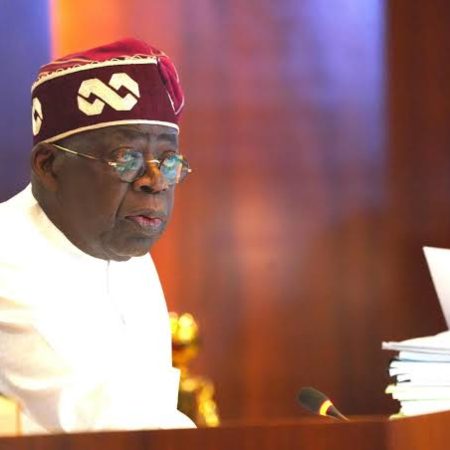
President Bola Tinubu’s meeting with Igbo stakeholders in Lagos on Monday continued his effort to broaden support through community and business networks.
According to the presidency, participants pledged support while Tinubu offered assurances of inclusive governance. Traders’ representative Tony Nwakeze also requested loans at five per cent interest to help businesses expand and move towards manufacturing. That was a request; the account did not announce an operational loan scheme.

The economic request gives the gathering significance beyond its endorsements.
Business owners want access to finance, reliable services and room to grow. Their electoral decisions may depend on whether political commitments produce practical improvements.
The gathering demonstrates outreach and organised support among those present. It cannot establish the preferences of an entire ethnic community. Voters retain their individual judgments, including when community leaders endorse a candidate.
The CBN Holds Its Position
The Central Bank’s Monetary Policy Committee retained the benchmark interest rate at 23 per cent today.
Set beside the traders’ request, the decision illustrates a central political tension: preserving economic stability while improving access to affordable finance.
The policy rate and the interest charged on a particular business loan are different measures. Even so, financing costs remain part of the environment in which enterprises decide whether to invest, employ and expand.

For the government, the campaign challenge is to show how stabilisation will translate into stronger livelihoods.
For the opposition, promising cheaper credit requires an explanation of funding, eligibility, repayment and protection against politically connected beneficiaries.
Voters deserve to see how those proposals would work.
Opposition Cooperation Still Awaits Its Decision Day
The opposition’s second summit remains scheduled for November 30, following its postponement from November 23. Organisers intend participating parties and candidates to endorse a framework for cooperation, democratic renewal and reform. A common presidential candidate has not been announced.
The distinction matters.

Parties can cooperate on election monitoring, campaign freedoms and policy priorities while continuing to compete for votes. Whether they intend to go further needs an explicit answer.
Monday’s summit should be assessed through its commitments: who signs, what each participant authorises and what work begins afterward.
The ADC, NDC, APM, SDP, PRP and participating PDP faction also have different local interests to reconcile. A national understanding becomes useful when constituency organisations know how to act on it.

Saturday Offers A Measurable Test
INEC has selected 17,676 polling units, covering two units in each registration area, for its nationwide mock accreditation and result-upload exercise on Saturday, November 28. The announced operating hours are 8:30 a.m. to 2:30 p.m. Nigerian time.
This gives parties, observers and voters an opportunity to assess performance before the general election.
The useful evidence will include whether equipment works, eligible participants can be accredited, results upload correctly and failures receive a prompt, documented response.
INEC should publish findings and explain the corrective work required. A test earns public value when its results can be examined.
The position of the main camps is clearer in some respects, while important uncertainties remain:
•APC/Tinubu: outreach continues through party, community and business networks. The challenge is converting endorsements and the government’s record into individual votes.
•ADC/Atiku: the leadership appeal remains consequential. INEC’s latest reported position is that it will await the appellate decision before determining its next action; that does not establish that the ADC has won its appeal.
•NDC/Obi-Kwankwaso: the Delta violence creates immediate safety concerns, while the Omo-Agege judgment introduces a separate organisational uncertainty.
•APM/Makinde and other opposition partners: November 30 will test whether negotiations produce defined, implementable cooperation.
State and constituency developments deserve attention because presidential campaigns depend on local organisers, candidates and polling agents. Recent local and off-cycle results can inform that assessment when turnout, competitiveness and local circumstances are considered.
Election Watch assessment: campaign safety and legal uncertainty have become more consequential. The material reviewed does not support declaring a fresh national swing.

Can Young People Participate Without Paying With Their Safety?
The Delta deaths give this edition’s Youth Metre an immediate focus: the conditions under which people enter political life.
Campaigns depend on volunteers, organisers and supporters. Those participants need protection, clear responsibilities and leaders who reject intimidation consistently.
Young Nigerians should also have meaningful roles in examining proposals and holding campaigns accountable. Employment promises need funding and delivery plans. Enterprise support needs published access rules. Training needs a credible connection to work.
Saturday’s INEC exercise offers another practical point of engagement: eligible participants can help test the process, while accredited observers and journalists document performance and unresolved problems.
Youth Metre assessment: safety, economic opportunity and confidence in vote counting are the priorities to watch. No fresh, credible age-specific polling reviewed establishes a change in youth candidate preference.
What To Watch Before Friday
•Investigative findings and accountability following the Uduere killings.
•Any response, appeal or INEC action concerning Omo-Agege’s nomination.
•Any appellate order affecting the ADC leadership dispute.
•INEC’s arrangements for observing and reporting Saturday’s test.
•Final confirmation of the November 30 summit’s participants and commitments.
The Signal

Political party tracker
Party Latest verified position
APC No additional major defection or nomination change established today.
PDP Disagreement over participation in the proposed opposition coalition remains unresolved.
ADC Presidential nomination and national leadership litigation remain unresolved.
NDC Delta Central nomination nullified; party boycotts police security meeting.
Labour Party Disputed endorsement of Tinubu by the Abure faction has not changed the officially listed presidential ticket.
NNPP: No newly verified material organisational change.
APGA Existing presidential cooperation with APC remains in place.
APM, PRP and SDP Proposed November 30 opposition cooperation summit remains the next significant milestone.
Accord No additional qualifying electoral development established today.
The ADC leadership appeal and opposition coalition arrangements remain outstanding, with no newly verified resolution in today’s review.
Geopolitical-Zone Assessment
Geopolitical zone: Electoral development to monitor
South-South: Delta Central candidacy dispute and campaign security
South-East No newly verified material change
South-West: Election technology preparations in Lagos and Oyo
North-Central: Campaign access, security and existing party disputes
North-West: Existing political realignments, particularly in Kano
North-East: Outstanding candidate nomination disputes
Nationwide Election personnel recruitment and technology readiness
Countdown To 2027
Presidential & National Assembly
53 days
16 January 2027
Governorship & State Assembly
74 days
6 February 2027
Upcoming Milestones
28 Nov. INEC nationwide technology test
30 Nov. Proposed opposition coalition summit
2 Dec. Tinubu eligibility litigation resumes
3 Dec. INEC ad hoc personnel recruitment deadline
The Bottom Line

The Omo-Agege judgment represents a concrete change in the legal position of a National Assembly candidacy. The NDC’s security meeting boycott and INEC’s personnel shortage also raise substantive questions about the conditions under which the elections will be conducted.
With less than two months until the presidential election, electoral preparedness, campaign freedom and candidate eligibility deserve as much scrutiny as party alignments.
Electoral map: Delta Central requires a candidate-level adjustment, subject to appellate proceedings.
Presidential voter preferences: No newly verified evidence supports a change in the national assessment.
Campaigns are asking Nigerians to invest their hopes, time and resources in the coming election. The institutions and leaders involved owe them protection and a credible process.
The freedom to participate safely is the first promise every campaign must honour.

Other Articles



No Comment! Be the first one.