


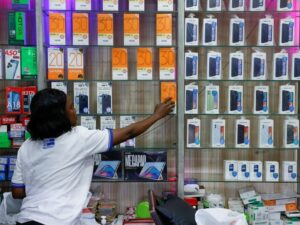
Nigeria’s smartphone market recorded one of its sharpest contractions in the third quarter of 2026, as rising handset prices, higher import costs and declining consumer purchasing power continued to weaken demand for mobile devices.
According to the latest research by global technology market intelligence firm Omdia, smartphone shipments in Nigeria fell by 47 per cent year-on-year in the third quarter, making the country the worst-performing among Africa’s major smartphone markets during the period.
The figure was contained in Omdia’s latest report released on November 23, which showed that smartphone shipments across Africa declined by 40 per cent year-on-year to 13.7 million units in the third quarter, compared with 22.8 million units recorded in the corresponding period of 2025.
The continental decline represents the steepest year-on-year contraction in three years, following three consecutive years of third-quarter growth.
Omdia attributed the downturn in Nigeria to mounting economic pressures, including higher fuel costs following the removal of petrol subsidies, limited access to foreign exchange for import payments and rising handset prices, which have further reduced households’ capacity to purchase new devices.
The development highlights the growing affordability challenge facing Nigeria’s telecommunications and digital economy, particularly as smartphones have become essential tools for accessing digital financial services, education, e-commerce, communication and other internet-based services.
The report also showed that the decline was more pronounced in the entry-level segment, which traditionally accounts for a significant proportion of smartphone purchases in African markets.

Shipments of smartphones priced below $100 fell by nearly 70 per cent across Africa during the quarter, while feature phone shipments increased by 27 per cent, suggesting that consumers are increasingly postponing device upgrades or opting for cheaper alternatives.
Commenting on the development, Manish Pravinkumar, Principal Analyst at Omdia, said affordability was increasingly determining consumer purchasing decisions across the continent.
“The figures show how affordability is shaping buying decisions in Africa. Some buyers are waiting longer to upgrade or choosing a refurbished smartphone to stay within budget,” he said.
He explained that although the average selling price of smartphones in Africa reached $222 in the third quarter, the highest third-quarter level in a decade, the overall market value still declined by 15 per cent.
According to him, the increase in average selling prices reflects growing affordability pressures rather than a significant shift towards premium devices.
The impact of the downturn was also evident among major smartphone manufacturers, particularly those with substantial exposure to the entry-level market.
TRANSSION, whose brands include Tecno, Infinix and itel, retained its position as Africa’s largest smartphone vendor, accounting for 48 per cent of shipments during the quarter. However, its shipments declined by 43 per cent, reflecting the impact of weakening demand for affordable devices.
Samsung recorded a comparatively smaller decline of eight per cent, increasing its market share to 23 per cent. Omdia attributed the company’s performance partly to its relationships with mobile network operators and its broad Galaxy A-series portfolio.
Meanwhile, Xiaomi’s shipments declined by 49 per cent, while HONOR recorded a 14 per cent drop. OPPO experienced the steepest contraction among the leading vendors, with shipments falling by 69 per cent.
Aside from Nigeria, Egypt recorded a 41 per cent decline in smartphone shipments, while Kenya and South Africa experienced contractions of 35 per cent and 20 per cent, respectively.
Looking ahead, Omdia expects Africa’s smartphone shipments to fall 23 per cent in 2026 and another 25 per cent in 2027, suggesting the affordability challenge could persist over the next two years.
Pravinkumar said manufacturers would face the difficult task of balancing rising production costs with consumers’ ability to pay.
“The forecast shows how heavily Africa’s smartphone market depends on affordable devices and continued growth in shipments,” he said.
“With cost pressures expected to persist into 2027, vendors face a difficult pricing challenge. They need to keep entry-level devices profitable, but passing higher component costs on to buyers risks putting smartphones beyond the reach of more households.”
He added that governments, manufacturers, and mobile network operators have important roles to play in improving device affordability through policy adjustments, local manufacturing, and consumer financing arrangements.
“Governments, manufacturers and mobile operators all have a role in improving affordability. Closer cooperation will be essential to expand local manufacturing, make distribution more cost-effective, and give more customers access to financing. The next phase of growth depends on making connected devices affordable for a wider range of buyers,” he said.
Consequently, for Nigeria, the development raises concerns about the pace of smartphone adoption and the country’s broader digital inclusion ambitions, particularly among low-income households and people in underserved communities who depend on affordable devices to access digital services.
We’ve got the edge. Get real-time reports, breaking scoops, and exclusive angles delivered straight to your phone. Don’t settle for stale news. Join LEADERSHIP NEWS on WhatsApp for 24/7 updates →

Other Articles

2027: Court adjourns Kano NDC governorship suit to December




No Comment! Be the first one.