


Road accidents remain a major public safety concern, claiming thousands of lives and leaving many others injured annually.
While government agencies continue to implement measures to reduce crashes, the responsibility of preventing further casualties and assisting victims also rests with members of the public who may be first at an accident scene.
The National Bureau of Statistics, in a report released in May, said 1,347 Nigerians died in 2,720 road crashes in the first quarter of 2026.
In November, the Federal Road Safety Corps reported a 13.8 per cent reduction in road traffic crashes across the country in the third quarter of 2026, with fatalities dropping from 1,077 in the corresponding period of 2025 to 941.
Despite the reported reduction, road crashes remain a serious concern, particularly because the actions taken in the first few minutes after an accident can determine whether injured victims receive timely assistance.
However, witnessing an accident can leave people confused about what to do. While the instinct to rush towards victims and help is understandable, responding without caution or basic first-aid knowledge can expose rescuers to danger and worsen victims’ injuries.
A 2025 scoping review published in the Scandinavian Journal of Trauma, Resuscitation and Emergency Medicine, examining 33 studies on bystander interventions, identified scene safety, early assistance and structured first-aid training as important components of post-crash response.
The 2024 American Heart Association and American Red Cross First Aid Guidelines emphasise the early recognition of life-threatening conditions, activation of emergency medical services and appropriate first-aid intervention.
Speaking with Saturday PUNCH, the Public Education Officer of the Ogun State Sector Command of the FRSC, Afolabi Odunsi-Oyewole, emphasised the importance of promptly contacting emergency responders, securing the accident scene and prioritising assistance to victims.
Similarly, the Police Public Relations Officer of the Adamawa State Command, Suleiman Yahaya, advised eyewitnesses to clear road obstructions, administer first aid, report incidents to the nearest police station and assist victims in accessing medical attention.
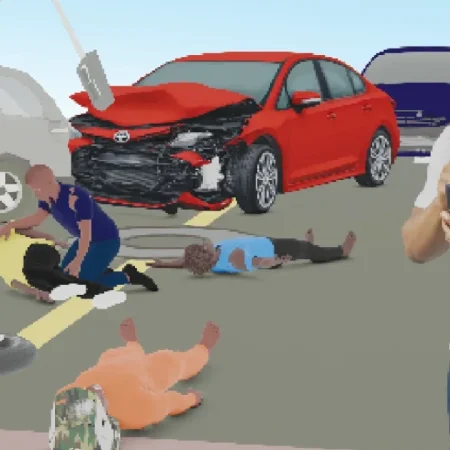
Here are five things to do when you witness a road accident:
Call emergency services
Do not assume that someone else has contacted emergency responders. Make the call yourself or delegate the responsibility to another bystander. Dial 112 for the national emergency response service or 122 to reach the Federal Road Safety Corps.
Odunsi-Oyewole said, “The first thing is for you to dial our emergency number, which is 122. Before you do much, the closest command or patrol would reach you and take it from there. But make sure you call the number earlier.
“We also do training for first responders who patrol along the roads on what they should do if they witness an accident.”
Secure the area
Your first responsibility is to protect yourself before attempting to assist accident victims. Do not rush into the road or approach a crashed vehicle without checking for potential dangers.
Watch out for oncoming vehicles, leaking fuel, smoke, fire, fallen electrical cables, broken glass and other hazards that could cause another accident.
Odunsi-Oyewole advised, “Look for one or two people that you can cordon the area with so that another accident will not happen while you are trying to rescue the victims.”
Be careful with victims
One common mistake people make at accident scenes is rushing to pull victims out of damaged vehicles or carry injured persons to nearby hospitals without assessing their condition.
Yahaya said, “While waiting, they can also rush the victims to the hospital. Doctors have a responsibility to accept the victims of such accidents and give them the treatment that is needed without wasting time.”
Offer basic first aid
Odunsi-Oyewole advised eyewitnesses to pay particular attention to victims who appear unconscious or unable to communicate.
He said, “What you must observe if you see victims on the floor: the one that is not talking at all is the first person you should attend to. Whoever is shouting is not the first person you should attend to because that person still has the strength to talk, but those that can’t say anything and look lifeless are the first people you should give aid to.”
He added that sympathisers should avoid giving injured victims food, water or medication.
Report the incident
Yahaya advised eyewitnesses to assist police officers in investigating the circumstances surrounding the accident.
“You should assist the victims by applying first aid to them, removing them from the road, clearing the road, reporting to the nearest police station,” he said.
He also advised the public to cooperate with investigating officers to help establish the causes of such crashes.

Other Articles

Police yet to confirm Jimmy Odukoya arrest warrant



No Comment! Be the first one.