


The Independent National Electoral Commission (INEC) on Saturday conducted a nationwide accreditation exercise across selected polling units in the 36 states and the Federal Capital Territory (FCT).
The exercise was designed to test the commission’s upgraded BVAS devices, electronic accreditation and transmission of polling unit results to the INEC Result Viewing Portal (IReV).
The exercise was marked by low turnout -voter apathy, inadequate public awareness and technical difficulties with election technology ahead of the 2027 general elections.
INEC Chairman, Prof. Joash Amupitan, had described the exercise as a critical test of the commission’s preparedness for the 2027 elections.
“On the 28th of this month, we will conduct a mock accreditation across all states of the federation to simulate the presidential election and verify that we have gotten both accreditation and electronic result transmission right,” he said.
However, findings from Saturday’s exercise raised questions about the commission’s ability to ensure widespread voter participation and seamless accreditation during the actual elections.
In Abuja, observations at two polling units in Wuse Ward showed that only 12 voters participated in the exercise.
At a polling unit at the junction of Bannex Plaza Road and Wuse 2, INEC officials said that only 7 people had participated out of 780 registered voters as of about 10:30am.
At another polling unit around the OAU Quarters area, only five people were recorded as having participated.
Similarly, polling units in Gyadi-Gyadi South Ward, Tarauni Local Government Area of Kano state, recorded no voter turnout as of 10:00 am, despite the presence of INEC officials and election materials.
In Ogun State, residents of the Owode Local Government Area claimed they were unaware of any mock election arrangements and that no exercise was conducted in the area.
In Oyo state, a polling unit in Ward 5, Unit 41, Ibadan North Local Government Area, had yet to record any accreditation as of about 11:00 am, despite the presence of electoral officials.
The situation was also similar in parts of Lagos state, where low voter participation was reported in Ikeja, Agege, Oshodi and Isolo.
In Kogi state, electoral observer Nathaniel Abaniwo attributed the low turnout partly to the market day, which he said might have affected participation.
In Ondo state, a voter, Ogunseye, encountered difficulties when the accreditation machine failed to capture his face during the exercise at Ajipowo Ward 2, Polling Unit 17, in Akure South Local Government Area.
Ondo State Resident Electoral Commissioner, Mutiu Agboke, acknowledged the low turnout, saying the commission had expected more voters.
“So far, what we have been able to see is that people came out to participate in the exercise. Although we expected a higher turnout, several factors contributed to the low turnout. Environmental factors were among them,” he said.
Agboke also suggested that expectations of financial incentives might have influenced participation in some locations.
“You also heard what an elderly man said at one of the centres when he asked, ‘Oh God, did you bring money?’ This suggests that some people were expecting to receive money before coming out to participate. All these are among the factors responsible for the turnout we witnessed,” he said.
Despite the reported difficulties, Agboke said the commission recorded encouraging results in its assessment of the accreditation machines.
In Lagos State, the commission expressed satisfaction with the BVAS’s performance during the exercise.
The Resident Electoral Commissioner, Prof. Ayobami Salami, said accreditation took less than one minute per voter, with no complaints of technical or network failures recorded at the polling unit he monitored.
“I have been very impressed with what we have seen. You have accompanied us on this exercise, and you have observed that there has been no problem with the BVAS,” he said.
“It takes less than one minute to accredit a voter, and everything has gone seamlessly.”
Salami also disclosed that INEC had acquired about 57,000 additional BVAS machines, which had been calibrated alongside existing devices to ensure uniform settings.
He said the commission had reduced the per-machine voter threshold from 1,250 to 850 to minimise delays during accreditation.
According to him, additional BVAS devices would be deployed to polling units with more than 850 registered voters.
The Nigeria Civil Society Situation Room had earlier expressed concerns over inadequate public communication and stakeholder engagement ahead of the exercise.
In its preliminary statement, the organisation said the short notice given to citizens and stakeholders could affect participation and independent observation.
It noted that although INEC announced the exercise on November 12, the list of selected polling units was not published until November 23.
“While Situation Room welcomes this initiative because it provides an opportunity to identify and address potential technical and operational challenges ahead of the general elections, there are concerns surrounding the preparations for the exercise,” the organisation said.
It added that a mock exercise should go beyond testing technology to provide an opportunity for political parties, civil society organisations and citizens to observe and assess the electoral process.
Aside from that, presidential candidates from major political parties intensified their campaigns for the 2027 general election.
President Bola Tinubu of the All Progressives Congress(APC) was in Borno and Enugu states for the party’s presidential rally.
In Borno, Tinubu urged terrorists and bandits operating across the country to abandon violence and surrender, declaring that his administration remains determined to defeat insecurity and restore lasting peace.
He also assured residents of Borno state that the Federal Government would intensify efforts to rescue schoolchildren abducted in Askira-Uba, expressing confidence that the victims would regain their freedom.
Speaking in Enugu, Tinubu unveiled fresh infrastructure projects for the Southeast, approving the Eastern Gas Pipeline and Eastern railway line, while pledging improved electricity supply and the dualisation of two strategic highways linking the region to neighbouring states.
The president also promised interest-free loans for farmers and increased investment in education and youth development as part of efforts to accelerate economic growth and improve people’s living conditions.
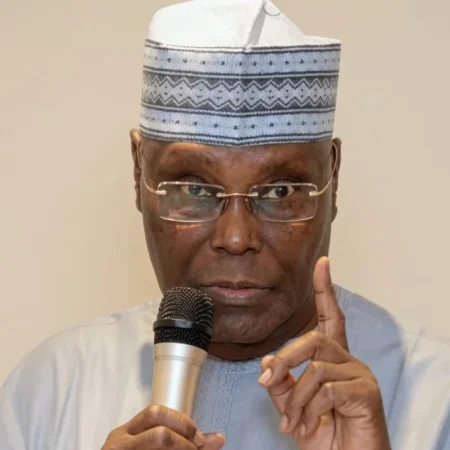
Also, the African Democratic Congress (ADC) presidential candidate Atiku Abubakar held a campaign rally in Lokoja, Kogi state, where he pledged to revive and complete the Ajaokuta Steel Company using foreign investment, restore petrol subsidies to lower living costs, and develop regional transport infrastructure including the Kabba-to-Egbe road and Baro Port via dredging of the River Niger.
During the rally, Atiku urged voters to remain at polling units until voting ends to safeguard the election process and commended Kogi State Governor, Usman Ododo, for providing a peaceful venue and security for the rally, while criticising some APC governors over alleged restrictions on opposition campaigns.
Similarly, the presidential candidate of the Nigeria Democratic Congress(NDC), Peter Obi also intensified his political activities with an engagement in Aba, Abia state, where he criticised the Tinubu administration and called on Nigerians to vote the president out in 2027.
Addressing supporters at the Primetime Event Centre along the Port Harcourt-Aba Expressway, Obi accused the federal government of failing to fulfil its campaign promises, particularly in the power sector.
Obi said a government he hoped to form with former Kano State Governor Rabiu Kwankwaso would prioritise national unity, economic growth, education, healthcare and industrial development.
The former Anambra governor also promised to generate, transmit and distribute at least 10,000 megawatts of electricity, insisting that public borrowing should be directed towards productive investments.
Peter Obi visited the Abuja adjoining settlements of Suleja in Niger state and New Karu in Nasarawa state for campaign engagements and town hall meetings.
Furthermore, the presidential candidate of the Social Democratic Party (SDP), Prince Adewole Adebayo, held a town hall meeting with party leaders, candidates and supporters in Nasarawa state, where he criticised the ruling APC over the country’s economic and security challenges.
He urged Nigerians to use their votes to remove a non-performing government in 2027, saying public criticism and protests alone cannot bring about political change.
Up ahead, the opposition coalition will hold a summit tomorrow, bringing together representatives of several political parties, including ADC, NDC, Allied Peoples Movement (APM), Peoples Redemption Party (PRP) and factions of the Peoples Democratic Party (PDP).
The proposed discussions are expected to focus on opposition cooperation and the possibility of establishing a common political platform ahead of the 2027 elections.
We’ve got the edge. Get real-time reports, breaking scoops, and exclusive angles delivered straight to your phone. Don’t settle for stale news. Join LEADERSHIP NEWS on WhatsApp for 24/7 updates →

Other Articles

No Comment! Be the first one.