

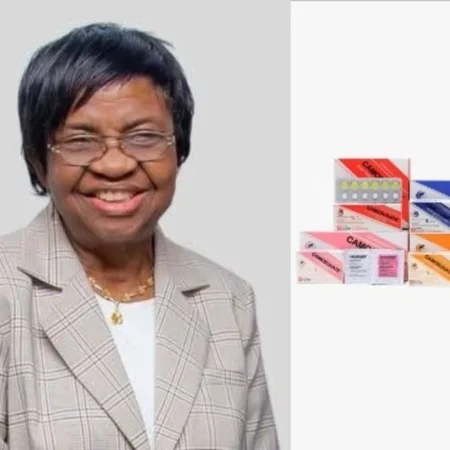
The National Agency for Food and Drug Administration and Control (NAFDAC) has dismissed reports claiming that Camosunate, an antimalarial medicine containing artesunate and amodiaquine, has been banned in Nigeria, describing the claims as false and misleading.
In an official statement released on Saturday, November 21, the agency clarified that Camosunate had not been banned in Nigeria, stressing that it had neither prohibited the brand nor medicines containing the artesunate-amodiaquine combination.
The statement, issued by NAFDAC Director-General and Chief Executive Officer, Professor Mojisola Adeyeye, provided a response to growing public concerns surrounding the antimalarial medicine.
The clarification followed the circulation of unverified reports on social media suggesting that the medicine had been prohibited by the regulatory agency.
ALSO READ: NAFDAC destroys ₦22.73bn fake, substandard products
Addressing the claims, NAFDAC explained that although some symptoms mentioned in the reports might fall within the medicine’s recognised side-effect profile, they did not constitute evidence of a regulatory ban or withdrawal from the Nigerian market.
Reassuring the public, the agency urged Nigerians not to mistake information about possible adverse drug reactions for an official prohibition, reaffirming that Camosunate remained unbanned in the country.
NAFDAC also encouraged patients, healthcare professionals and members of the public to report suspected adverse drug reactions through its Med Safety App, available on Android and iOS devices, or at the nearest NAFDAC office.
The agency appealed to Nigerians to stop circulating the reports and urged those who had previously shared them to use the same platforms to disseminate its official clarification.
The statement said: “This clarification is particularly important as malaria remains a major public health challenge in Nigeria, making access to accurate information about medicines essential to effective treatment and disease control.
“NAFDAC’s position is clear: Camosunate has not been banned in Nigeria. “
The agency, however, urged the public to rely on verified regulatory information, seek professional medical guidance and report suspected adverse reactions through established channels rather than allow unverified claims to create unnecessary fear.
WATCH TOP VIDEOS FROM NIGERIAN TRIBUNE TV

Other Articles





No Comment! Be the first one.