


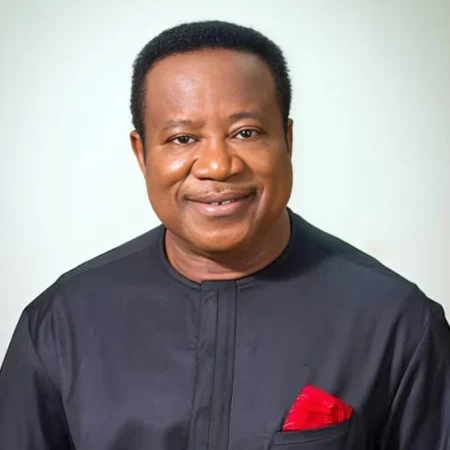
A former Deputy Speaker of the Oyo State House of Assembly, Pastor Femi Emmanuel, has criticised Nigeria’s political and constitutional structure, saying it makes it almost impossible for an Igbo person or a Christian to emerge as president without the backing of dominant political interests.
Emmanuel, who is the National Director of Politics and Governance for the Pentecostal Fellowship of Nigeria (PFN) and founder of Living Spring Chapel International, said the country’s political arrangement had entrenched a system in which the North wielded enormous influence in determining who becomes president.
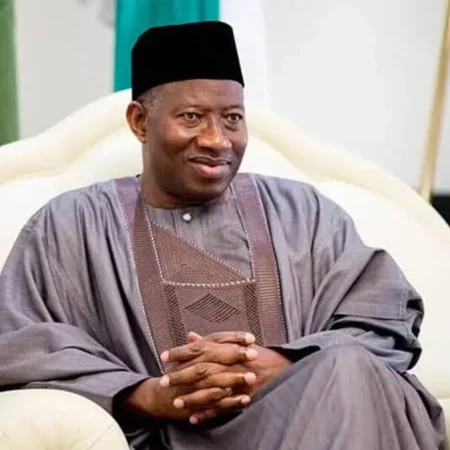
He argued that the presidencies of former leaders, Olusegun Obasanjo and Goodluck Jonathan, were products of exceptional political circumstances rather than a political structure that guaranteed equal opportunities for all regions and religious groups.
The cleric stated this during an interview monitored on Inside Sources, a Channels Television programme, on Sunday.
According to him, the political arrangement makes it difficult for an Igbo presidential aspirant to secure the necessary regional alliances, while Christians also face limitations because of their inadequate participation in political parties.
He said, “The kind of constitution we have now, there is no way an Igbo man or a Christian will ever become president of this country.
“When it comes back to the South after eight years in the North, once the South-West takes its turn, you don’t see a handshake across the Niger. Then the Igbo person goes to the minority again. And because Christians are not in political parties, when it comes back to the South, a Christian cannot emerge because we are not in parties.”
Emmanuel recalled that Obasanjo emerged as president in 1999 against the backdrop of the political crisis surrounding the annulment of the June 12, 1993 presidential election won by the late Chief MKO Abiola.
He said the decision to support a South-West candidate was largely influenced by the need to address the perceived injustice against the Yoruba following the annulment of the election.
He also described Jonathan’s emergence as president as a consequence of the death of his predecessor, Umaru Musa Yar’Adua, arguing that the political trajectory could have been different had Yar’Adua completed his tenure.
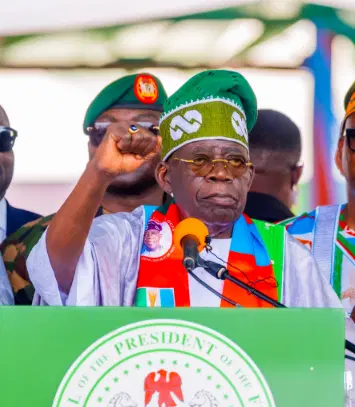
The former deputy speaker, however, acknowledged the political dexterity of President Bola Tinubu, saying his ability to build a formidable political structure in the South-West, sustain alliances across the Niger and support former President Muhammadu Buhari for eight years contributed significantly to his emergence as president.
He maintained that the North remained the most influential political bloc in determining the country’s leadership, raising questions about whether Nigerians should continue with such an arrangement.
On the way forward, Emmanuel advocated a fundamental restructuring of the country, urging Nigerians to revisit the recommendations of the 2014 National Conference convened by the Jonathan administration.
He regretted that the recommendations of the conference were not implemented by the succeeding administration, despite the resources invested in bringing together representatives from different parts of the country to discuss the nation’s future.
He also recalled the committee set up by the All Progressives Congress (APC) under former Kaduna State Governor, Nasir El-Rufai, to examine constitutional and political reforms, questioning why its recommendations had not translated into meaningful changes.
“Go back to the 2014 constitutional conference document, tinker with it in line with the reality of today. Then we are making progress,” he said.
Emmanuel, who expressed concern that serving political office holders might resist reforms capable of threatening their interests, called on patriotic Nigerians, particularly youths and the Christian community, to become actively involved in the political process.
He argued that merely obtaining voters’ cards and participating in general elections would not bring meaningful change unless citizens became involved in the internal structures of political parties where candidates and political office holders emerged.
According to him, the political process has been captured at the grassroots, particularly at the ward level, by entrenched interests who determine party leadership, delegates and candidates.
He urged Nigerians with integrity and genuine commitment to national development to obtain party membership cards, participate in ward meetings and become involved in the selection of candidates.
“If we vote a hundred times, we will be voting for the same people because they have colonised the nucleus that keeps producing them,” he said.
The cleric described the situation as a form of political colonisation, arguing that while Nigeria had experienced British colonial rule and prolonged military rule, the country was now grappling with what he termed the colonisation of its political structures by entrenched politicians.
He added that the political process would remain largely inaccessible to credible Nigerians as long as party structures at the grassroots remained under the control of political godfathers and their associates.
Emmanuel also challenged Christian leaders to reconsider their approach to politics, accusing some religious leaders of discouraging their members from participating in political activities through teachings that portray politics as inherently evil or dirty.
He said the church, despite its numerical strength, had become politically disadvantaged because its members were encouraged to pray and obtain voters’ cards without being adequately mobilised to join political parties and participate in decision-making.
“The church community is an imprisoned community. We, their general overseers — I am not taking myself out of it — have imprisoned them with our doctrine and teaching: ‘Politics is evil. Politics is dirty. Leave politics for politicians.’ That is what has brought us to this place,” he said.
He urged pastors and general overseers to mobilise their members beyond prayer meetings and political prophecies, insisting that Christians must understand the importance of political participation in shaping the country’s leadership.
Citing Psalm 115:16, Emmanuel said God had entrusted the earth to humanity and would not personally select Nigeria’s president, governors or members of the National Assembly.
He maintained that although prayers remained important, Nigerians must take responsibility for the country’s political direction.
“God is not going to come and help us pick our president. God is not going to come and help us pick our governors. He has left that for us,” he said.
The PFN political director further called for what he described as a non-violent revolution of the mind, urging young people to translate their numerical strength and social media influence into active political participation.
He said the country’s transformation required a deliberate effort by credible Nigerians to penetrate party structures, build alliances and ensure that competent and patriotic individuals emerged as candidates for elective offices.
Emmanuel stressed that the responsibility for changing Nigeria’s political direction rested on citizens themselves, insisting that the country could not achieve a different outcome by remaining outside the structures that produce its leaders.
“You cannot change a system you are not involved in. Praying until eternity and prophesying until eternity, God is not going to come and put a president or governor in place for us. We must do it ourselves,” he said.
WATCH TOP VIDEOS FROM NIGERIAN TRIBUNE TV

Other Articles
Nigeria needs an agricultural revolution to curb food inflat
FirstBank targets smarter banking with LIT App – Daily Trust

No Comment! Be the first one.