


When the founder dies, who inherits the pulpit? A son, a trusted protégé, a handpicked successor or the person believed to have received the divine calling? Across some of the world’s most influential Christian ministries, the battle for the altar has exposed a complicated intersection of faith, family loyalty, power, ambition and institutional control. In this report, NGOZI IBE takes a closer look at the unfolding crisis at The Fountain of Life Church.
From bitter succession disputes and courtroom battle to factional wars and questions of divine authority, the struggle over who occupies the pulpit is increasingly revealing that church leadership is not always settled by prayer alone. But where does God’s calling end and human politics begin? From the leadership transitions involving T.D. Jakes, to Bishop David Abioye and Enoch Adeboye, as well as the bitter divisions that have rocked the Assemblies of God Church in Nigeria.
When Pastor Taiwo Odukoya died in August 2023, his son, Pastor Jimmy Odukoya, emerged as the Senior Pastor of The Fountain of Life Church, taking over the leadership of the Lagos-based ministry his father co-founded.
The transition initially appeared settled. However, barely three years later, a leadership dispute has raised questions about the authority of church founders, the influence of family members, the role of trustees and, ultimately, who determines the next person to occupy the pulpit.
The crisis became public on November 17, 2026, when a group identifying itself as the church’s Board of Trustees announced that it had withdrawn recognition of Jimmy as Senior Pastor and appointed Pastor Rotimi Okpaise as interim spiritual and administrative leader.
The group cited a December 2021 video in which the late Taiwo Odukoya reportedly named Pastor Kunle Areogun as his preferred successor, with Jimmy expected to serve as Areogun’s administrative assistant and head of the youth ministry.
According to the trustees, the recording was not presented during the 2023 succession process and only came to their attention in late 2025.
Jimmy, however, said his father initially asked him to record the video before travelling to the United States for surgery but later requested that it be deleted after the surgery was successful.
He also accused members of the board and his sisters of working together to remove him.
The church rejected the trustees’ announcement, insisting that Jimmy remained its duly appointed Senior Pastor and chairman of the Board of Trustees.
The dispute subsequently moved to court. On November 18, the Lagos State High Court granted an interim ex-parte order restraining Jimmy from presenting himself as the church’s Senior Pastor and spiritual head.
The order was made without first hearing his response, while the substantive dispute remained unresolved.
Beyond the immediate disagreement, the development has revived a broader question: Is church leadership something a founder can pass on to a child, or should succession be determined by divine calling and an established institutional process?
When The Pulpit Becomes A Family Legacy
Across the Christian world, some prominent church founders have chosen family members to succeed them, while others have adopted leadership structures that separate biological relationships from spiritual authority.
One example is American televangelist Bishop T.D. Jakes, founder of The Potter’s House in Dallas, Texas.
In April 2025, Jakes announced plans to entrust the senior leadership of the ministry to his daughter, Pastor Sarah Jakes Roberts, and her husband, Pastor Touré Roberts. The couple had been involved in the ministry’s leadership over several years and were prepared for greater responsibilities.
Under the arrangement, Bishop Jakes retained his position as chairman of the Board and spiritual overseer, while Sarah and Touré became co-senior pastors.
The transition illustrates how a founder’s child can become part of a succession plan, particularly when that individual has been involved in the ministry and prepared for leadership.
However, it also raises questions about whether family relationships should influence who leads a congregation. While family succession may offer continuity and preserve a founder’s vision, spiritual preparedness, leadership capacity and accountability remain important considerations.
A church is not simply a family business where leadership automatically passes from one generation to another. Its responsibilities extend to a congregation whose members may have no biological relationship with the founder.
David Abioye And The Question Of A New Beginning
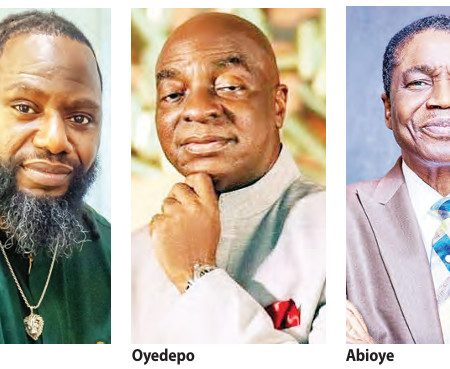
Another example is Bishop David Abioye, who served as the first vice-president of Living Faith Church Worldwide, popularly known as Winners’ Chapel, founded by Bishop David Oyedepo.
After more than four decades in the ministry, Abioye retired in October 2024 alongside Bishop Thomas Aremu, following the church’s review of its administrative policy, which introduced a retirement age of 55 for leadership positions.
His retirement, however, did not mark the end of his ministry career. In May 2025, he unveiled Living Word Conquerors Global Assembly, also known as Conquerors Global Assembly.
His journey illustrates another possible outcome of church leadership transitions: a senior minister may establish an independent ministry rather than succeed the founder of an established denomination.
However, Abioye’s departure followed the church’s retirement policy and should not be interpreted as a direct succession dispute with Oyedepo.
His experience nevertheless raises questions about mentorship, institutional structures and individual calling, particularly when senior ministers spend decades helping to build a ministry but are not necessarily positioned to inherit its leadership.
Would Adeboye Hand Over To His Son?
The future leadership of the Redeemed Christian Church of God (RCCG) also presents an interesting dimension to the conversation.
Pastor Enoch Adeboye, who has led the global church since 1981, has publicly rejected the idea that the ministry should automatically become a family inheritance.
In June 2026, he reportedly said that the church belonged to Jesus Christ and that nobody had the right to hand it over to a biological child. He has also maintained that God would reveal his successor.
Adeboye’s own leadership history provides an example of institutional transition. In 2017, he stepped down as General Overseer of RCCG in Nigeria, with Pastor Joseph Obayemi appointed National Overseer, while retaining his position as General Overseer of RCCG Worldwide.
His position raises an important distinction between recognising a spiritual calling in a family member and appointing that person simply because of their relationship with the founder.
A biological child may possess the character, experience and leadership capacity required for the role, but these qualities should be considered independently of family ties.
Assemblies Of God Church: When Leadership Disputes Tear A Church Apart
The Assemblies of God Church in Nigeria provides another striking example of how leadership disagreements can threaten the unity of a major Christian denomination. What began as a dispute over authority, governance and the administration of the church eventually developed into a protracted crisis that divided its leadership, ministers and congregations.
The crisis came into the open in March 2014, following the suspension and removal of the then General Superintendent, Professor Paul Emeka, by the church’s leadership. Emeka, who had been elected in November 2010, challenged the decision, insisting that the process leading to his removal was improper. His opponents, however, maintained that he had violated the church’s constitution and governing procedures.
Pastor Chidi Okoroafor, who was then Assistant General Superintendent, subsequently emerged as acting General Superintendent and later became the recognised head of the church’s leadership under the faction that opposed Emeka. The disagreement also brought the role of the former General Superintendent, Dr Charles Osueke, into focus, with questions raised about his involvement in the events surrounding Emeka’s removal and the emergence of a new leadership.
The dispute was not merely about who occupied the office of General Superintendent. It exposed deeper disagreements over the powers of the General Council, the Executive Committee, the church’s constitution and the extent to which former leaders should influence the administration of the institution after leaving office. Allegations of abuse of power, financial impropriety and disregard for established procedures were exchanged by the opposing sides, although these claims were contested.
As the disagreement escalated, the church became polarised, with one faction supporting Emeka and the other backing Okoroafor. The dispute spilled beyond leadership meetings into courtrooms and church premises. In some locations, rival groups struggled over control of church properties, the national secretariat in Enugu and the authority to conduct worship services.
The crisis became particularly disturbing when reports emerged of confrontations, physical clashes, destruction of property and the deployment of security operatives to maintain order. At one point, the church effectively operated two competing headquarters in Enugu, with each faction laying claim to the legitimate leadership of the denomination. Police and military personnel were also reportedly deployed during the struggle over control of the national secretariat.
The matter eventually reached the Supreme Court of Nigeria. In February 2017, the apex court dismissed Paul Emeka’s appeal and affirmed the lower court’s decision upholding his removal by the church. The judgment represented a significant legal development in the prolonged dispute, although the years of division had already taken a toll on the denomination and its congregations.
For ordinary worshippers, the consequences went beyond the disagreement among senior church leaders. Congregations found themselves divided by competing loyalties, with some members supporting one faction and others remaining with the opposing group. In some communities, worship arrangements were disrupted, church facilities became points of contention, and members who had worshipped together for years found themselves on opposite sides of an institutional struggle.
The Assemblies of God experience raises an important question about the limits of personal influence, institutional authority and constitutional governance in church administration. It also demonstrates how unresolved leadership disagreements can spread from the highest levels of a denomination to local congregations, affecting ministers, families and ordinary worshippers.
Unlike a conventional family succession dispute, the Assemblies of God crisis centred largely on competing claims over institutional authority and the legitimacy of leadership decisions. Yet it reinforces the same fundamental lesson: when succession and leadership processes are not accepted by all relevant stakeholders, the unity of a church can become seriously threatened.
Is It God Who Chooses The Successor?
For many Christians, the belief is that God chooses those who lead His church. Biblical examples often cited in discussions about succession include Moses and Joshua, Saul and David, as well as Elijah and Elisha.
These transitions suggest that leadership is not necessarily about biological inheritance but also about calling, preparation and the ability to carry forward a responsibility.
However, even where a church believes God chooses its leaders, there must be a process through which that conviction is recognised and translated into an institutional decision.
Who confirms the calling? Who assesses the candidate’s character and capacity? What happens when a founder’s preference conflicts with the church’s constitution or the decision of its governing body?
An ideal handover should begin long before a founder retires or dies. It should involve preparing potential leaders, communicating the succession framework and ensuring that appointments follow the church’s constitution.
The successor should be assessed on the basis of spiritual maturity, character, teaching ability, leadership experience and administrative capacity. There should also be safeguards to ensure that the governing board can hold church leadership accountable.
Ultimately, the church’s mission must remain bigger than the person occupying the pulpit.
The experiences of Jimmy Odukoya, T.D. Jakes, David Abioye and Enoch Adeboye demonstrate that there is no single model of succession across Christian ministries.
Perhaps the most important consideration is not whether the successor shares the founder’s surname or has served under the founder for decades. Rather, it is whether the person is qualified to lead, whether the process is transparent and whether the church’s governing structure recognises the appointment.
If a church is truly God’s house, should its leadership be treated as a family inheritance, a personal appointment or a responsibility entrusted through spiritual discernment, institutional accountability and the confidence of the congregation?
The answer may determine whether the next generation inherits a thriving ministry or a succession crisis.
And when the battle for the pulpit becomes more important than the mission of the church, who ultimately pays the price: the leaders fighting for authority or the congregation they are called to serve?
We’ve got the edge. Get real-time reports, breaking scoops, and exclusive angles delivered straight to your phone. Don’t settle for stale news. Join LEADERSHIP NEWS on WhatsApp for 24/7 updates →

Other Articles

How African women entrepreneurs can build sustainable businesses – Ukala
International breaks tough on top clubs – Mourinho


No Comment! Be the first one.